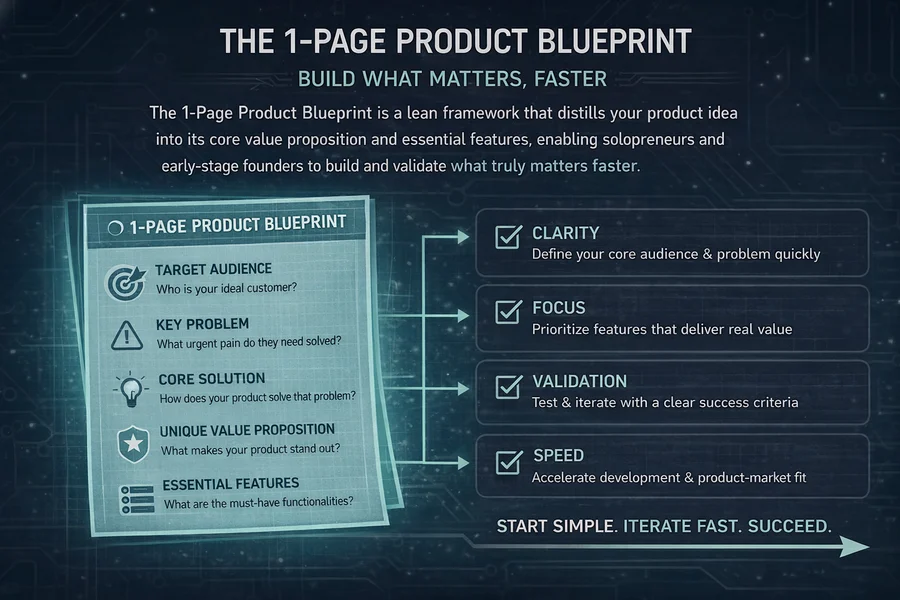
The most dangerous phase of any startup is the period between the initial "Aha!" moment and the first piece of real user data. Every day spent building features that haven't been validated is a day spent gambling with your most precious resources: time and capital.
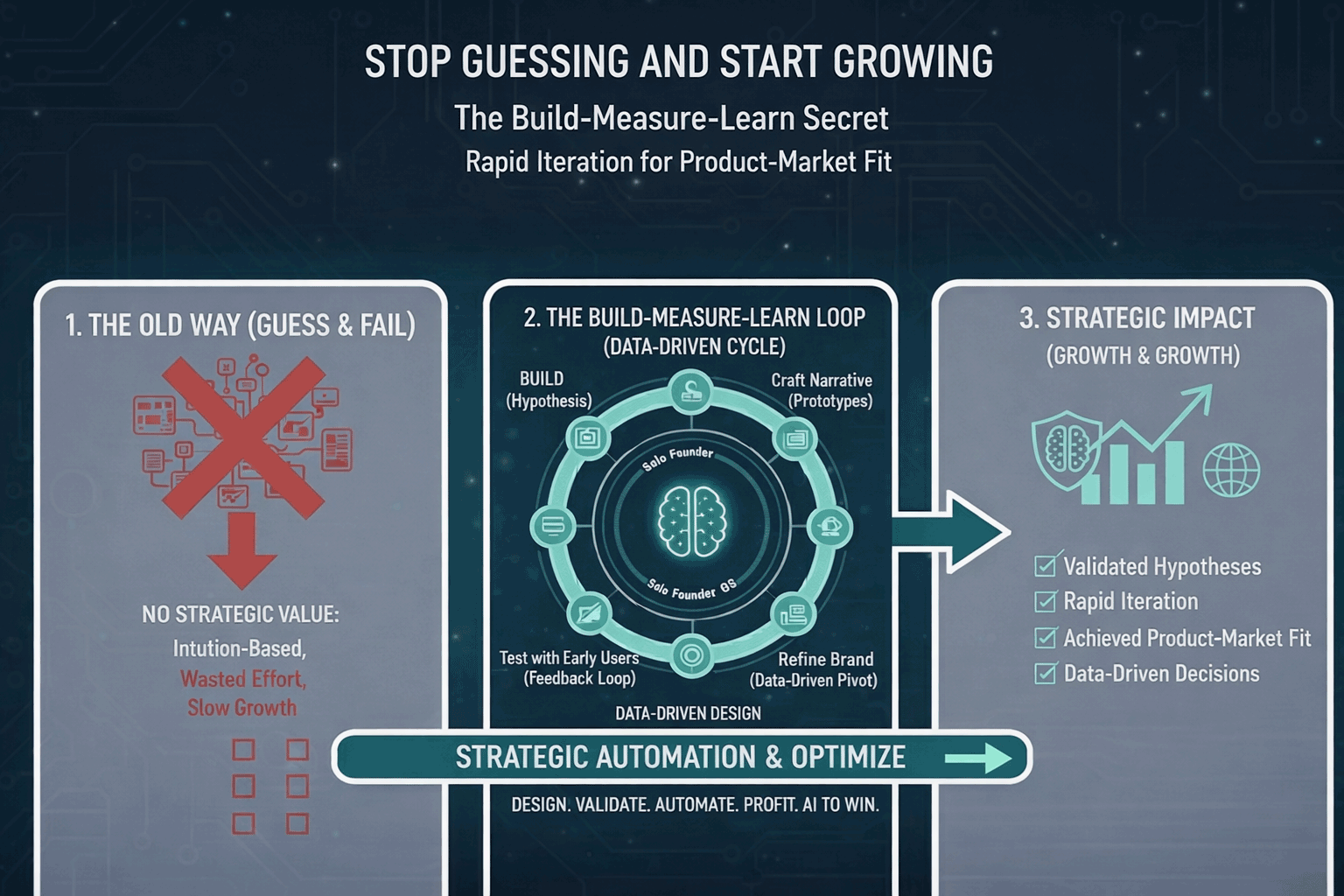
A Minimum Viable Product (MVP) isn't just a "lite" version of your product; it is a process of learning. It is the shortest path to discovering whether your hypothesis about a problem and its solution holds weight in the real world. To succeed, you must move from a "builder" mindset to a "scientist" mindset. This shift is crucial because it reorients your focus from simply creating something to actively learning from your market. Instead of assuming you know what users need, you adopt a systematic approach to test your assumptions and gather concrete evidence.
The "Over-Engineering" Trap
For most founders, the urge to build is reflexive. You have an idea, you see the vision, and you want to bring every bell and whistle to life immediately. However, over-engineering at the start is often a form of procrastination—it’s easier to hide behind code than to put a product in front of a customer and risk rejection. This tendency to add too many features too soon can be a subtle way of avoiding the difficult task of facing potential criticism or outright failure. It’s like meticulously crafting a beautiful menu for a restaurant that no one has yet tasted. The focus shifts from proving the core concept to perfecting non-essential details.
The goal of an MVP is to maximize the amount of validated learning about customers with the least effort. This doesn't mean building a broken product; it means building a product that is focused entirely on the core value proposition. Think of it as a highly functional prototype. It needs to demonstrate the fundamental benefit you offer. Every element included should directly contribute to solving the primary problem for your target user. Anything beyond this core functionality is a distraction and a potential waste of valuable time and resources.
Choosing Your Technology Wisely
In the MVP stage, your technology stack should be viewed as a means to an end. The goal is "Time to Market," not "Technical Elegance." If you spend three months building a custom backend for a product that fails to find a market, that is three months wasted. This is a critical point: the most sophisticated technology is irrelevant if the product doesn't resonate with users. Prioritizing speed and agility allows you to reach users quickly, gather feedback, and iterate. The elegance of your code or infrastructure can be addressed later, once you have validated that there is indeed a market for your solution.
No-Code / Low-Code
Platforms like Bubble, Webflow, and Glide allow you to build complex marketplaces and tools without custom code. Speed is your edge here; you can pivot your entire UI in an afternoon. These tools democratize development, enabling founders with limited coding experience to bring their ideas to life rapidly. They offer pre-built components and visual interfaces that drastically reduce development time. This allows for rapid experimentation and iteration, which is essential for validating product-market fit. You can test different user flows, designs, and feature sets with minimal coding overhead.
Build vs. Buy
Never build what you can rent. Use Stripe for payments, Twilio for messaging, and Auth0 for logins. Your unique value is rarely found in the utility logic. For common functionalities like payment processing, user authentication, or sending notifications, there are often well-established third-party services that are more robust, secure, and cost-effective than building them from scratch. Leveraging these "rentable" services frees up your development resources to focus on the unique aspects of your product that truly differentiate you from the competition. This strategic outsourcing is a cornerstone of efficient MVP development.
Architectural Simplicity
Monoliths are your friend. While microservices are great for scaling to millions of users, they are a nightmare for a team of one or two trying to move fast. Keep your data structure flat and your logic centralized. You are not building for enterprise-level complexity yet; you are building to see if you even need an enterprise. A monolithic architecture is simpler to set up, deploy, and manage in the early stages. It reduces the overhead associated with managing distributed systems and allows a small team to concentrate on core product development. The focus should be on getting a functional product to users, not on building an infrastructure designed for massive scale from day one. Scale can be addressed once the product's viability is proven.
The Art of Ruthless Prioritization
How do you decide what stays and what goes? For an MVP, you need to be aggressive. You should only build what is existential to the product’s success. This means ruthlessly cutting anything that isn't absolutely essential for the product to solve its core problem. It requires a deep understanding of your target user's primary pain point and how your product addresses it. Every feature added increases complexity, development time, and potential points of failure. Therefore, each feature must justify its existence by being integral to the fundamental value proposition.
The Existential Test
"If I remove this feature, does the product still solve the primary problem for the user?"
- No? It’s a Core Feature. Build it.
- Yes? It’s a "Nice-to-Have." Delete it from the backlog.
Remember: Every feature you add is more code to test, more code to debug, and more UI for the user to get confused by. This principle of minimalism is not about delivering a subpar experience; it's about delivering the essential experience with maximum efficiency. By focusing only on what is critical, you accelerate the feedback loop and reduce the risk of building something that no one truly needs or wants.
Functionality Over Polish
There is a common misconception that "Minimum" means "Broken." Your MVP must be stable and functional, but it does not need to be beautiful. The emphasis is on delivering a working solution to the user's problem. This means that while the core features should be robust and reliable, the aesthetic aspects and minor user experience enhancements can take a backseat. The goal is to validate the core utility of your product, not to win design awards. A functional product, even if it’s not visually stunning, can still provide immense value and gather crucial user feedback.
Structured Agility for Solo Teams
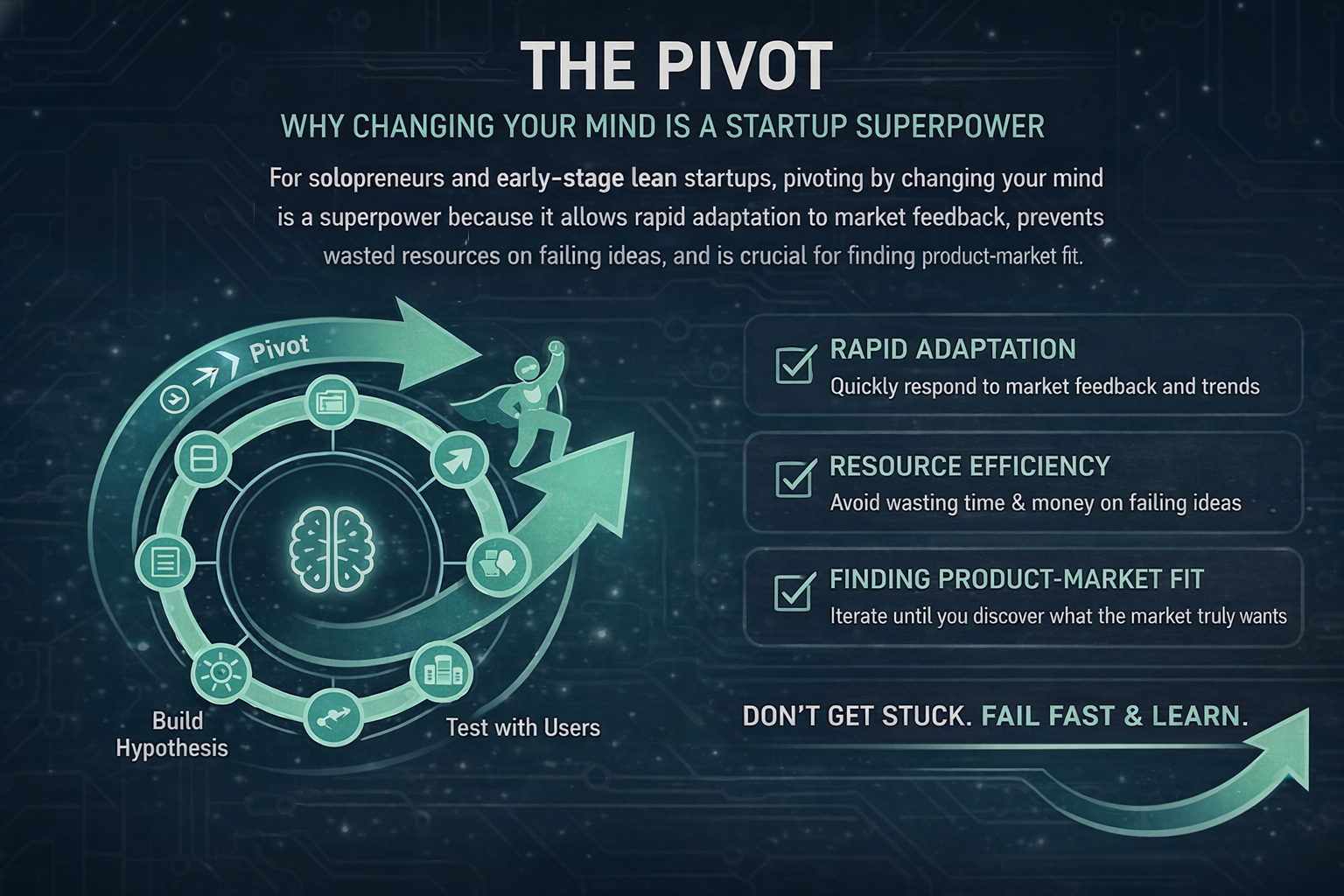
For solo founders or very small teams, agility is not just a buzzword; it's a survival mechanism. Moving quickly and being able to adapt is paramount. This requires a disciplined approach to workflow and a commitment to shipping frequently. The ability to pivot based on feedback is a superpower in the early stages of a startup. This structured approach ensures that progress is consistent and that the team remains focused on the most impactful tasks.
- The 48-Hour Sprint: Forget two-week cycles. Aim for what you can complete by the end of tomorrow. This accelerated pace forces you to break down tasks into very small, manageable units. It encourages a focus on delivering tangible progress in short bursts, making it easier to maintain momentum and get quick feedback. Instead of planning large, multi-week projects, you're focusing on what can be accomplished in a day or two, which makes the work feel less daunting and more achievable.
- Kill Your Darlings: If a feature takes twice as long as estimated, pivot or cut it. Sunk-cost is your enemy. This principle is about acknowledging that not all ideas will pan out as expected. If a particular feature or development path is proving far more time-consuming than anticipated, it's often more strategic to abandon it or drastically simplify it rather than get bogged down. The goal is to keep moving forward, and clinging to a problematic feature can halt progress for the entire product.
- Weekly Demo Day: Record a video of your progress. Sending it to a mentor forces you to keep the app functional. This practice creates external accountability. By regularly showcasing your work, you are motivated to ensure that there is always something demonstrable and functional to present. It also provides a regular opportunity for feedback from trusted advisors, helping you course-correct before significant time is invested in the wrong direction. This routine is vital for maintaining focus and ensuring consistent progress.
💡 Pro Tip: The "Manual Behind the Curtain"
Can you do this manually for the first 10 users? This "Wizard of Oz" prototyping lets you validate if users care before writing a single line of automation logic. This is an incredibly powerful technique for validating demand. Instead of building complex automation, imagine you are the one performing the service or generating the output behind the scenes. If users find value in what you can deliver manually, it's a strong signal that building automated infrastructure is worthwhile. This approach drastically reduces upfront development risk and provides immediate validation.
No comments yet
Be the first to share your thoughts on this article!