Tools & Resources
AI-powered tools and recommended resources for the Ideation stage.
Recommended Workflow
Use these tools in sequence for best results:
- Problem Statement - Clarify what problem you're solving before anything else
- Customer Personas - Understand who experiences this problem most acutely
- Jobs to Be Done - Dig into the underlying motivations and desired outcomes
- Lean Canvas - Synthesize everything into a one-page business model
Avoid Solution-First Thinking
Don't jump to building before you've validated the problem exists.
Avoid Tool Overload
Pick 2-3 tools and use them well. More tools don't mean more validation.
LeanPivot AI Tools
AI-powered tools to help you execute this stage faster.
AI Insights Generator
Generate market insights and identify opportunities.
Problem Statement Generator
Articulate the problem you're solving with precision.
Customer Persona Builder
Define your target customer in detail with AI assistance.
Jobs to Be Done Analyzer
Understand customer motivations and desired outcomes.
Lean Canvas Generator
Synthesize everything into a one-page business model.
AI Business Blueprint
AI-powered business concept development and validation.
Recommended External Tools
Third-party tools that complement this stage of your journey.
Recommended Reading
Essential books for the Ideation stage.

Running Lean: Iterate from Plan A to a Plan That Works
Ash Maurya's practical guide to Lean Canvas and continuous innovation.
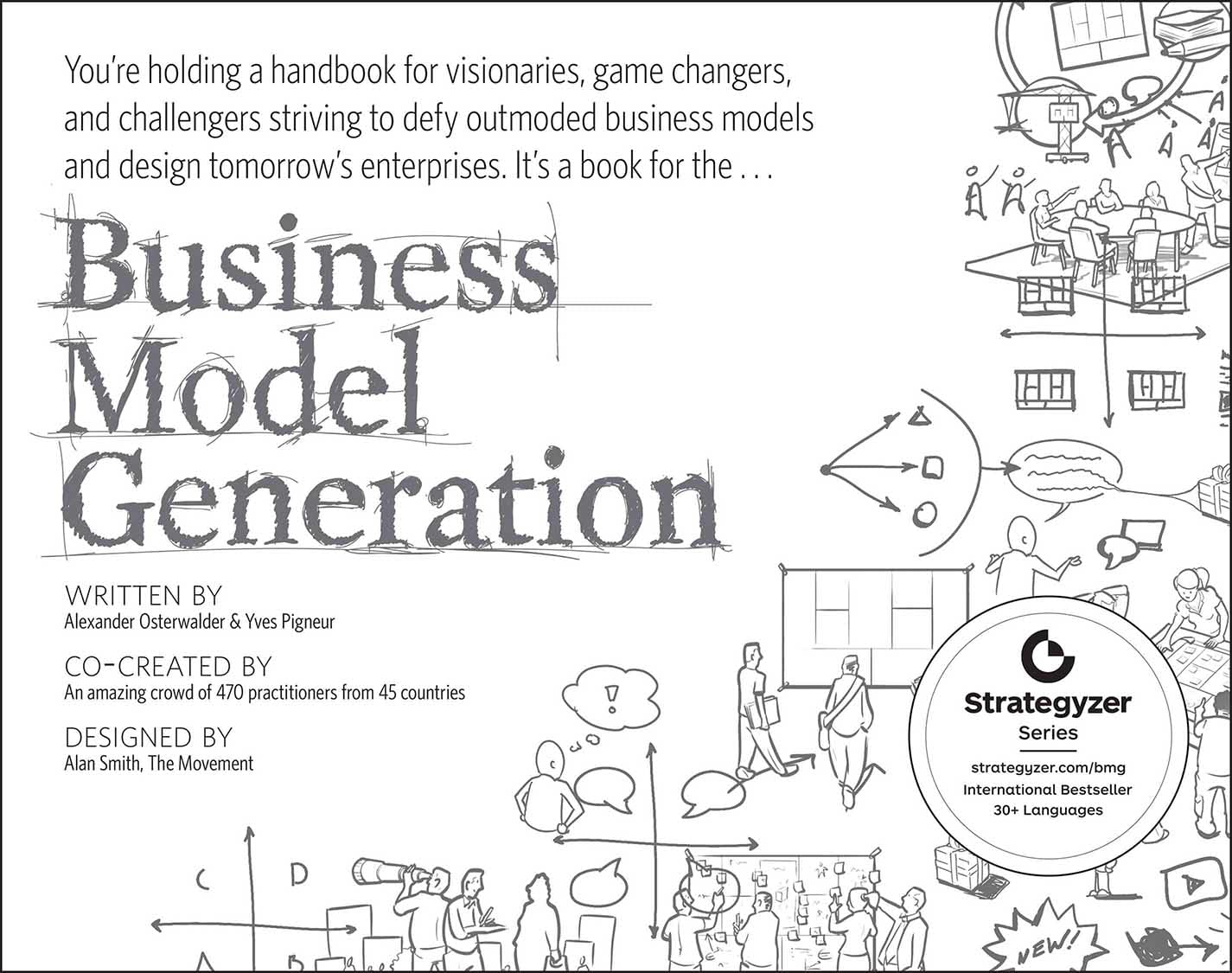
Business Model Generation: A Handbook for Visionaries, Game Changers, and Challengers
Business Model Generation is a handbook for visionaries, game changers, and challengers striving to defy outmoded business models and design tomorrow's enterprises. By Alex Osterwalder & Yves Pigneur.

Traction: How Any Startup Can Achieve Explosive Growth
Gabriel Weinberg's playbook for getting customers. 19 traction channels explained.

The Mom Test: How to Talk to Customers & Learn if Your Business is a Good Idea
How to Talk to Customers & Learn if Your Business is a Good Idea by Rob Fitzpatrick.
Tools & Resources
Software and services to accelerate your Ideation stage.
 courses
The Power of Regret: How Looking Backward Moves Us Forward
The Power of Regret: How Looking Backward Moves Us Forward
 tools
tools
Emergent.sh
Chat interface design tool for frontend and backend development. Coupon code: ROVNRMMG for 5% off on all payments
 courses
Ikigai: The Japanese Secret to a Long and Happy Life Hardcover
Ikigai: The Japanese Secret to a Long and Happy Life explores the Japanese concept of ikigai—the overlap of what you love, what you're good at, what you can be paid for, and what the world needs—as the key to a happier and longer life.
 tools
tools
Lovable.dev
AI-powered platform that builds full-stack web applications and websites from simple, natural language prompts.
 tools
tools
Qoder
Qoder is a next-generation AI-powered coding platform developed by Alibaba, designed to go beyond simple code completion and act as an agentic coding environment for real-world software development. Here’s what makes it unique:
 software
Comet: Your AI Browser for Instant Insight and Action
Perplexity AI is an advanced answer engine and AI-powered research tool that delivers conversational, source-cited responses. It streamlines information discovery for users and businesses with context retention, multiple focus modes (Web, Academic, Social, Video, Writing, Math), and enterprise-grade privacy. Key features include deep research, personalized follow-ups, and integrations with business tools for workflow automation. Perplexity is trusted by millions for research, content creation, market analysis, and more.
Some links are affiliate links. We may earn a small commission at no extra cost to you.
Next Steps
Once you've achieved clarity on your idea using these tools, you're ready to move to Customer Discovery where you'll test your assumptions with real customers.
Ready for Customer Discovery?
Your Lean Canvas is complete and you've identified your riskiest assumptions. Now it's time to talk to customers.
Go to Playbook 02: Customer DiscoverySave Your Progress
Create a free account to save your reading progress, bookmark chapters, and unlock Playbooks 04-08 (MVP, Launch, Growth & Funding).
Get Access to All Ideation Tools
Sign up free to use 50+ AI-powered tools for building and validating your startup idea.
Start Free TodayWorks Cited & Recommended Reading
Lean Startup & Validation
- 1. Features - Lean Startup Tools from Ideation to Investment. LeanPivot.ai
- 2. Ries, E. (2011). The Lean Startup: How Today's Entrepreneurs Use Continuous Innovation. Crown Business
- 3. Maurya, A. (2012). Running Lean: Iterate from Plan A to a Plan That Works. O'Reilly Media
- 4. Blank, S. (2013). The Four Steps to the Epiphany. K&S Ranch
- 5. An introduction to assumptions mapping. Mural
Jobs-to-Be-Done Framework
- 6. Christensen, C.M. et al. (2016). Competing Against Luck: The Story of Innovation and Customer Choice. Harper Business
- 7. Ulwick, A. (2016). Jobs to Be Done: Theory to Practice. Idea Bite Press
- 8. Klement, A. (2018). When Coffee and Kale Compete: Become great at making products people will buy. NYC Press
- 9. Jobs-to-be-Done: A Framework for Customer Needs. Harvard Business Review
Problem Discovery & Validation
- 10. Torres, T. (2021). Continuous Discovery Habits. Product Talk LLC
- 11. Fitzpatrick, R. (2013). The Mom Test: How to talk to customers. Robfitz Ltd
- 12. What Opportunities May Lead to Someone Becoming an Entrepreneur. MBA Disrupted
Blue Ocean & Differentiation
- 13. Kim, W.C. & Mauborgne, R. (2015). Blue Ocean Strategy, Expanded Edition. Harvard Business Review Press
- 14. The Four Actions Framework (ERRC Grid). Blue Ocean Strategy
- 15. Strategy Canvas: A Visual Tool for Differentiation. Blue Ocean Strategy
Market Analysis & Signals
- 16. How to Validate Your Startup Idea. Y Combinator
- 17. Market Sizing for Startups: TAM, SAM, SOM. Forbes
- 18. Maholic, J. (2019). IT Strategy: Issues and Practices. Scribd
Cognitive Biases & Decision Making
- 19. Kahneman, D. (2011). Thinking, Fast and Slow. Farrar, Straus and Giroux
Lean Canvas & Business Modeling
- 20. The Lean Canvas Explained. Lean Stack
- 21. Osterwalder, A. & Pigneur, Y. (2010). Business Model Generation. John Wiley & Sons
This playbook synthesizes research from lean startup methodology, Jobs-to-Be-Done theory, and behavioral economics. Some book links may be affiliate links.