
You’ve been working on your side hustle for three weeks. You finally posted about it on LinkedIn, and the response was incredible. You got 150 likes, 40 "Congrats!" comments, and your website dashboard shows that 500 people clicked the link. You feel like you’ve finally made it. You’re already thinking about quitting your day job.
But then, you look at your bank account. It’s $0.00. You look at your email list. It has 3 subscribers (one is your mom).
What happened? You fell into the Vanity Metrics Trap.
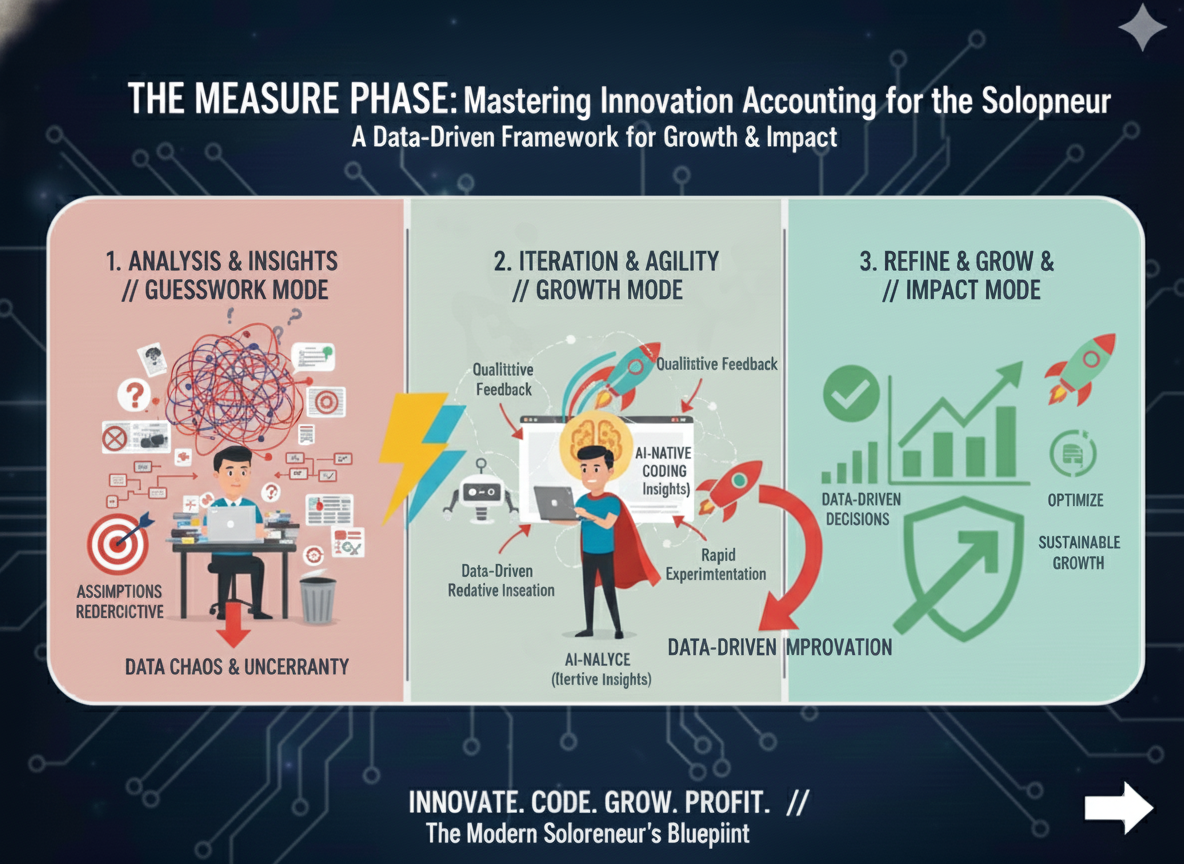
As a solopreneur or early-stage founder, your ego is often your own worst enemy. We all want to feel like we are winning, and big numbers make us feel like winners. However, in the world of the Build-Measure-Learn loop, the "Measure" phase isn't about feeling good—it's about finding the truth.
If you measure the wrong things, you will make the wrong decisions. And in a startup, the wrong decisions lead to the "Startup Death Spiral." To avoid this, you need to understand the difference between Vanity Metrics and Actionable Metrics.
What Are Vanity Metrics? (The "Feel-Good" Numbers)
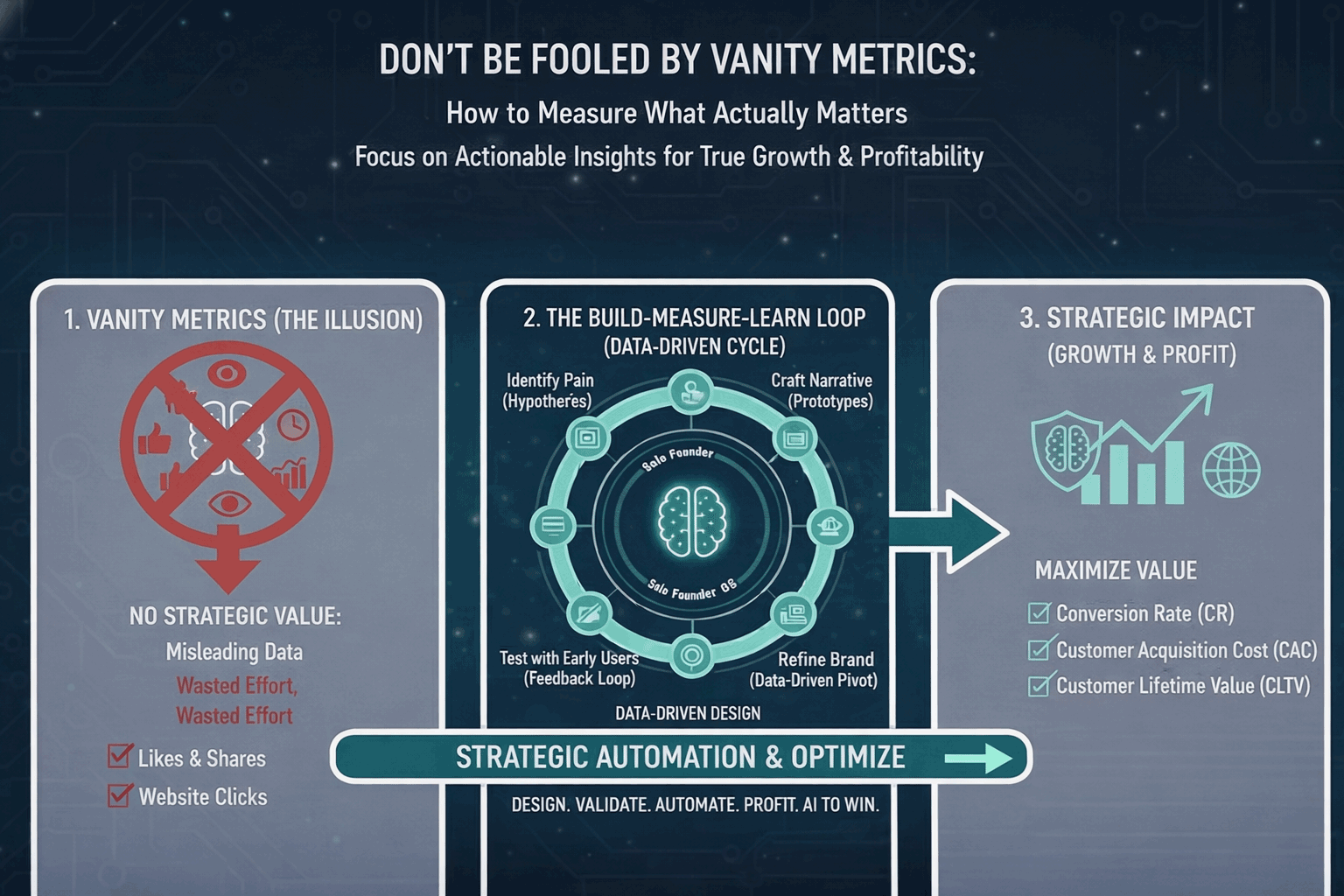
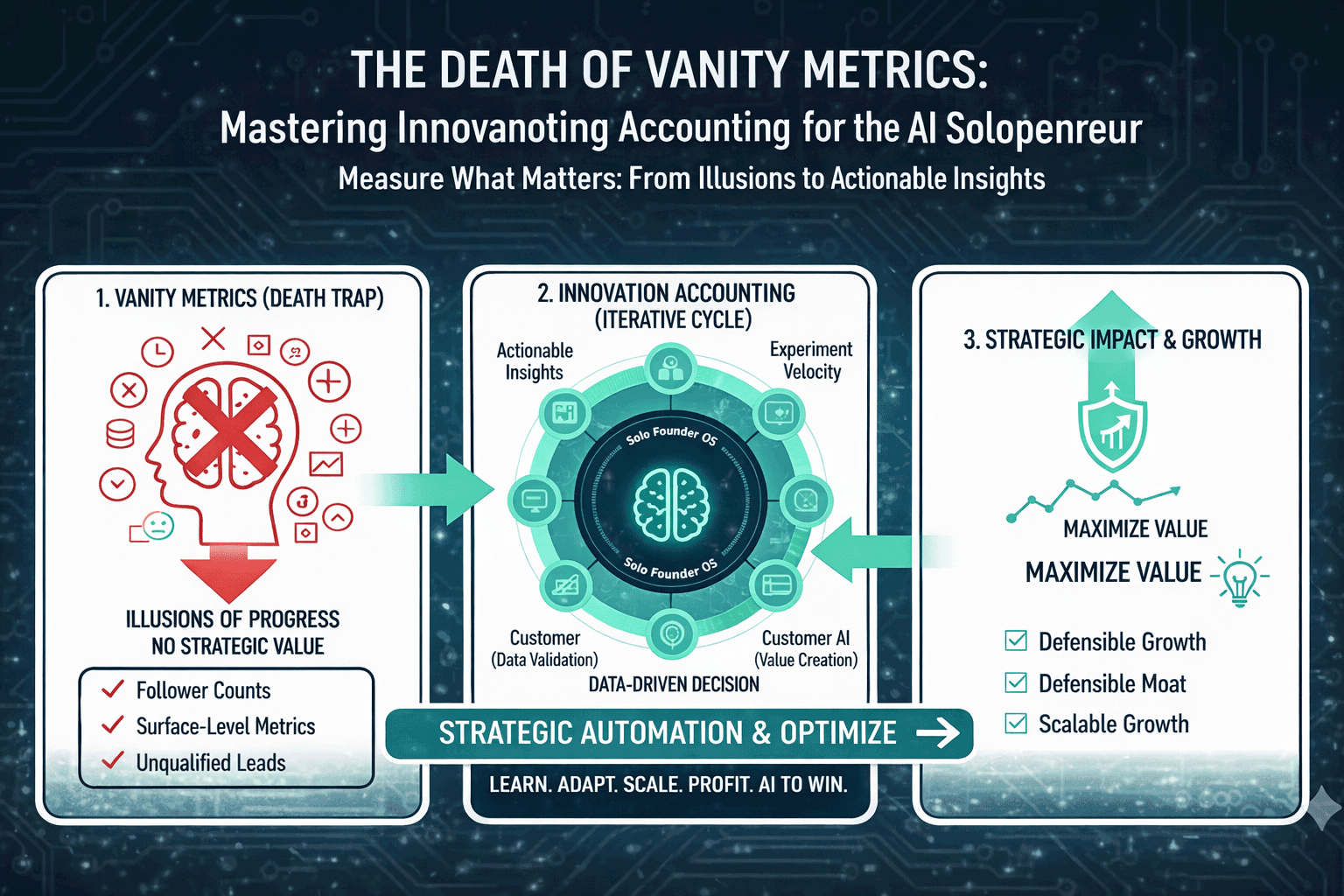
Vanity metrics are data points that look impressive on a slide deck but don't actually tell you anything about the health or future of your business. They are "hollow" numbers. They go up, but they don't explain why or what you should do next.
Common vanity metrics for solopreneurs include:
- Total Registered Users: This is the "cumulative" number of people who have ever signed up. It never goes down, which gives a false sense of growth even if 99% of those people never logged in again.
- Raw Page Views: Just because people landed on your site doesn't mean they liked what they saw. They might have clicked a link by accident and left 2 seconds later.
- Social Media Followers/Likes: Having 10,000 followers is great for an influencer, but for a founder, those followers are useless if they don't convert into customers.
- Total Downloads: If someone downloads your app but deletes it 30 seconds later, that download didn't help your business—it actually cost you money in server fees.
What Are Actionable Metrics? (The "Truth" Numbers)
Actionable metrics are the opposite of vanity metrics. They show cause and effect. They provide the "Learning" in the Build-Measure-Learn loop because they tell you exactly what is happening with your customers and—more importantly—why it is happening.
An actionable metric allows you to say: "If we change X, then Y will happen."
Key actionable metrics include:
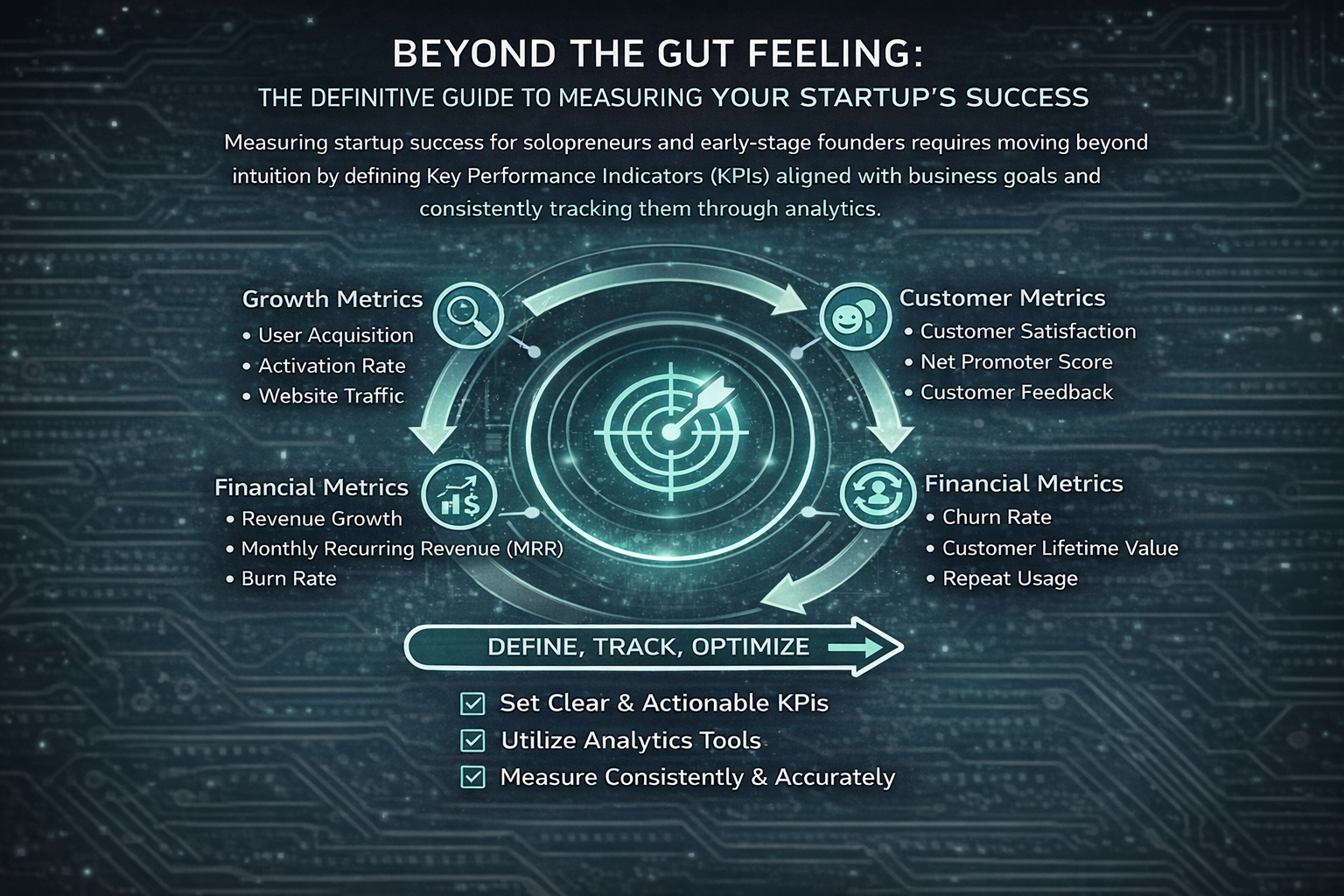
- CAC: How much money does it cost in ads or time to get one customer?
- LTV: How much money will that customer pay you over the whole time they use your product? If your LTV is higher than your CAC, you have a machine that prints money. If it's the other way around, you are losing money on every customer you get.
Innovation Accounting: A New Way to Keep Score
When you're a solopreneur, you don't have a CFO (Chief Financial Officer). You are the CFO. But traditional accounting (Profit and Loss statements) doesn't work for startups because, in the beginning, there is usually no profit.
You need Innovation Accounting. This is a three-step process to track your progress:
How to Spot a "Leaky Bucket"
Imagine you are running a subscription service for freelance writers.
- Week 1: You get 100 new sign-ups. (Total: 100)
- Week 2: You get 100 more sign-ups. (Total: 200)
- Week 3: You get 100 more sign-ups. (Total: 300)
Your "Total Users" graph looks like a perfect upward line. But if you look at your active users, you might see that 90 people from Week 1 quit by Week 2. This means you are spending all your energy (and maybe money) to acquire people who don't stay.
In the "Measure" phase, you should be obsessed with Churn. Churn is the percentage of customers who leave. A high churn rate is the "check engine light" of your startup. It means something in the "Build" phase didn't actually solve the user's problem.
Split Testing: The Founder’s Best Friend
One of the best ways to get actionable metrics is Split Testing (also called A/B Testing). This is where you show Version A of something to half your audience and Version B to the other half.
As a solopreneur, you can split-test almost anything:
- Two different prices.
- Two different email subject lines.
- Two different "Sign Up" button colors.
- Two different target audiences on Facebook ads.
If Version B gets 20% more clicks, you have a clear, data-driven reason to change your product. You aren't guessing anymore. You are letting the market lead you.
The "Three As" of Metrics
To make sure you are measuring the right things, check your metrics against the "Three As":
- Actionable: Does this data show a clear cause and effect? If the number changes, do I know what to do next?
- Accessible: Can I (and my team, if I have one) easily understand what this number means? If you need a PhD in statistics to understand your dashboard, it's not helpful.
- Auditable: Can I trust this data? If you think your "Total Visitors" is high but half of them are "bots" or "crawlers," your data is dirty. Make sure your numbers reflect real human behavior.
Don't Let the Numbers Kill Your Spirit
A final word of warning: Being data-driven doesn't mean you stop being creative. Numbers tell you what is happening, but they don't always tell you why.
If your conversion rate is low, the data tells you there is a problem. But the solution comes from your creativity and your empathy for your customer. The "Measure" phase is the guardrail that keeps your creativity on the right track. It ensures you aren't building a beautiful, creative masterpiece that nobody wants to buy.
Conclusion: Measuring Your Way to Success
Being a solopreneur is a journey through a fog of uncertainty. Vanity metrics are like a mirage—they look like a beautiful oasis, but they don't provide any water. Actionable metrics are like a compass. They might tell you that you are heading the wrong way, but that is exactly what you need to know to get back on the path to success.
- Go to your analytics or your bank statement.
- Find one "Vanity Metric" you’ve been bragging about.
- Find one "Actionable Metric" (like your churn rate or conversion rate) that you’ve been ignoring.
- Write down one thing you can "Build" this week to improve that actionable metric.
Next time you see a "big number" on your dashboard, ask yourself: "Does this number help me make a decision?" If the answer is no, stop celebrating and start looking for the numbers that actually matter.

No comments yet
Be the first to share your thoughts on this article!